Autonomous Agents and Multiagent Systems (AAMAS). Awarded annually to a single doctoral graduate worldwide for outstanding dissertation research in agent and multi-agent systems.
Spotlight paper, Conference on Neural Information Processing Systems, 2025
Oral presentation, AAAI Conference on Artificial Intelligence, 2025
AI Track, ACM Conference on Economics and Computation, 2024
Spotlight paper, Conference on Neural Information Processing Systems, 2022
Spotlight paper, International Conference on Learning Representations, 2022
International Conference on Learning Representations, 2021
Awarded to top 1% students at IIIS, Tsinghua University
Spotlight paper, Conference on Neural Information Processing Systems, 2020
Spotlight paper, International Conference on Learning Representations, 2020
Growing and Transferring Pathways for LLM Reinforcement Learning
2026arXivPDFVerbalizing Multi-Token Concepts in LLMs
2026arXivPDFEvery Cache Entry Earns Its Place: Global Allocation of Resolution and Coverage for KV Cache Compression
2026arXivPDFHow LLMs Are Persuaded: A Few Attention Heads, Rerouted
2026arXivPDFLoyal Agents: Training LLM Agents to Protect Principal Interests Under Strategic Information Asymmetry
2026arXivPDF
AM 220: Geometric Methods for Machine Learning
Spring 2026Teaching FellowDeep Reinforcement Learning
Spring 2020Teaching AssistantArtificial Intelligence: Principles and Techniques
Fall 2020Teaching AssistantArtificial Intelligence: Principles and Techniques
Fall 2019Teaching Assistant
International Conference on Learning Representations
2022–2026ICLRReviewerOutstanding Reviewer 2021Conference on Neural Information Processing Systems
2021–2026NeurIPSReviewerArea ChairInternational Conference on Machine Learning
2021–2026ICMLReviewerThe AAAI Conference on Artificial Intelligence
2020–2026AAAIReviewerInternational Joint Conference on Artificial Intelligence
2020–2026IJCAIReviewer
- Write: thw@mail.tsinghua.edu.cn
- Drop in: F509, Zhongguancun Zhizao Street, Haidian, Beijing
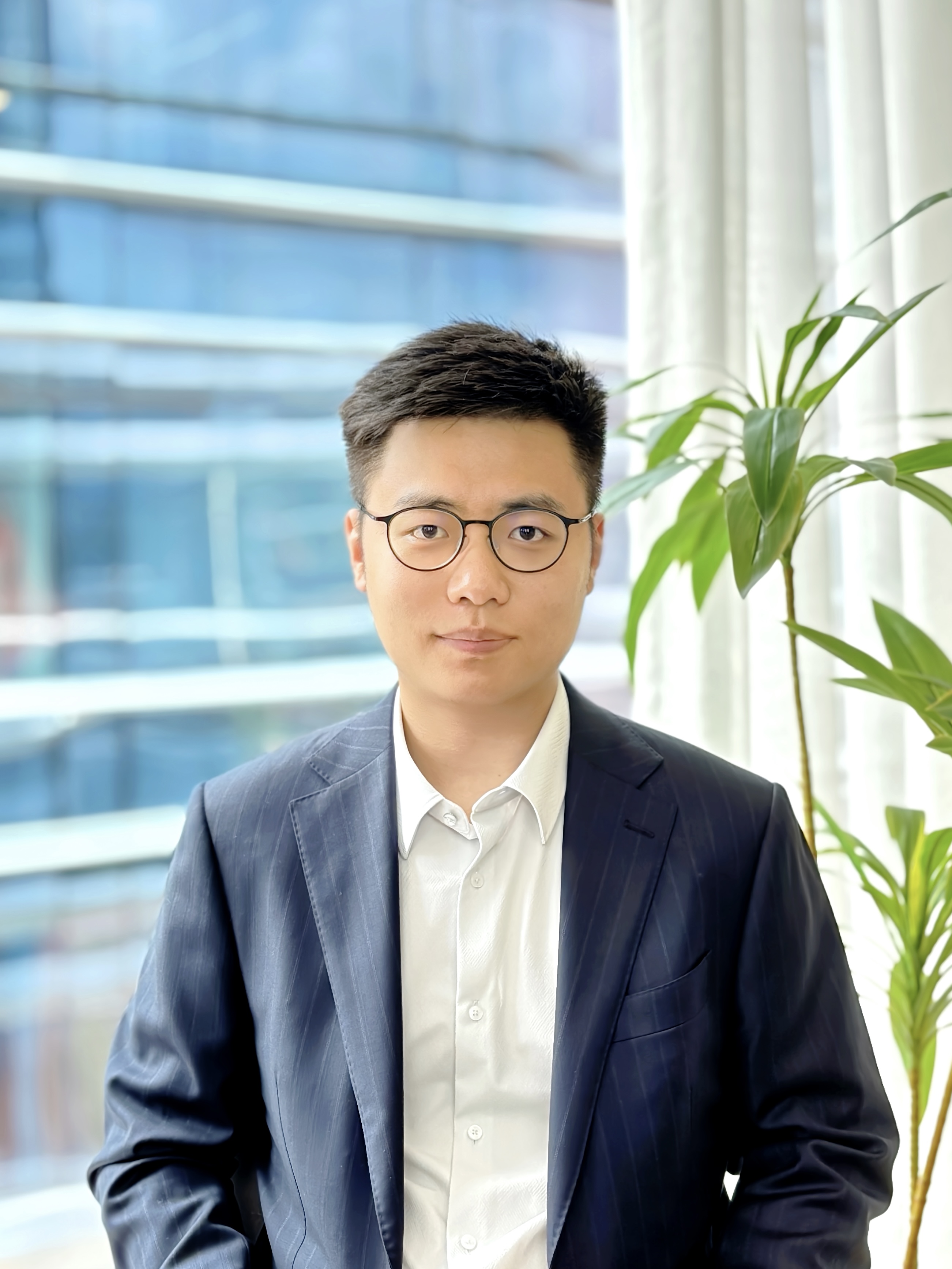
Hi, I'm Tonghan Wang. I am an Assistant Professor at the College of AI, Tsinghua University.
Research Interests
Current ongoing projects include:
- Foundation model innovation, generalization, self-evolution, and test-time training
- Advertising and market design for generative models, grounded in economic theory
- AI game theory with an emphasis on safety
- (Multi-)agent problems in generative models
I am continuously looking for passionate PhD students and undergraduate research interns. I admit two PhD students per year; PhD admissions are currently open for students entering in 2028 or later (including the 2027 early-admission cycle). I encourage prospective students to first connect through a research internship or collaborative project — this also helps you assess whether my group is the right fit for you.
Undergraduate interns: Students at any stage of undergraduate study are welcome. We can tailor a research plan to your background and future goals.
If you are excited about our research directions, please send your CV and transcripts to thw@mail.tsinghua.edu.cn, along with a brief description (one or two sentences) of a research problem you have worked on and what specific questions you find most interesting.
Mentoring Style
- Student development comes first. For students aiming for academic careers, I can facilitate collaborations or research visits with top institutions including Harvard, MIT, CMU, and Google.
- I encourage tackling hard and important problems, value originality and depth, and actively support collaboration across institutions and with industry.
- I have extensive personal experience navigating the complexities of U.S. visas 😂 and can offer detailed, practical advice.
About Me
- PhD from Harvard University, advised by Prof. David C. Parkes and Prof. Milind Tambe
- Master's from the Institute for Interdisciplinary Information Sciences (IIIS), Tsinghua University
- Victor Lesser Distinguished Dissertation Award, 2025 — awarded annually to a single doctoral graduate worldwide for outstanding dissertation research in agent and multi-agent systems
- Best Paper Award at ACM EC 2024 (AI Track); Oral at ACM EC 2026; multiple Spotlight/Oral recognitions at NeurIPS, ICLR, AAAI, and other top venues